

Blue Spirulina FAQ
Answers to the most common questions about Blue Spirulina powder, including taste, usage, heat sensitivity, storage, and natural coloring applications.
Blue Spirulina may fade due to heat, light, or air exposure. This is a natural property of the pigment (phycocyanin). For best results, use it in cold applications and store it away from direct sunlight.
Blue Spirulina is a natural blue pigment extracted from spirulina algae (phycocyanin). Unlike regular spirulina, it has a neutral taste and is mainly used as a natural food coloring in drinks and desserts.
No. Blue Spirulina has a neutral taste and does not carry the strong flavor typically associated with green spirulina.
No. Blue Spirulina is heat sensitive. High temperatures can reduce or fade its blue color, so it is best used in cold or low-temperature applications.
Start with ½–1 teaspoon (≈1–2 g) and mix it into cold or room-temperature liquids such as smoothies, lattes, or creams. Adjust the amount based on the desired color intensity.
Blue Spirulina is more expensive than regular spirulina because it is a refined extract.
The blue pigment (phycocyanin) must be carefully separated from the algae, which requires additional processing and reduces yield. This results in a more concentrated and specialized ingredient.
Because it is highly concentrated, a small amount is sufficient for most recipes, making it more economical in use than the price per gram suggests.
Yes. Blue Spirulina has a shelf life, typically around 24 months when stored properly.
Over time, the color intensity may gradually decrease, especially if exposed to heat, light, or moisture. Always store it in a cool, dry place away from direct sunlight.
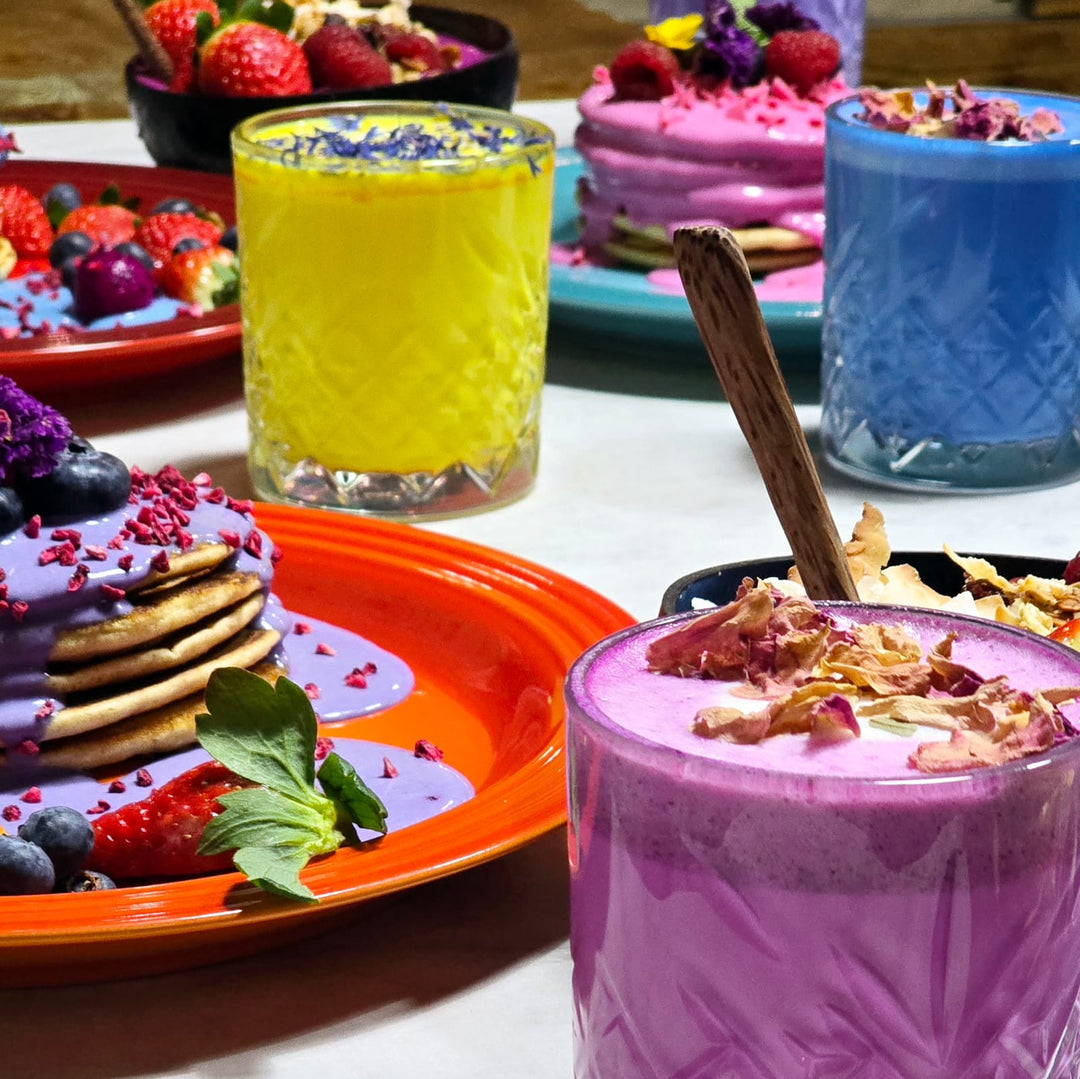
It is commonly used in smoothies, lattes, lemonades, desserts, yogurt, ice cream, and other recipes where a natural blue color is desired without changing the taste.
Yes. Blue Spirulina is widely used as a natural, plant-based alternative to artificial blue dyes, offering vibrant color without synthetic additives.
Yes. It is 100% plant-based and suitable for vegan and vegetarian diets.
Blue Spirulina and Butterfly Pea are both natural blue colorants, but they behave differently.
• Blue Spirulina provides a consistent blue color that is not pH-sensitive
• Butterfly Pea is pH-sensitive and changes color (blue to purple) when mixed with acidic ingredients
Blue Spirulina is typically used when a stable, predictable blue color is needed, while Butterfly Pea is often used for color-changing drinks and visual effects.
Color fading can occur due to heat exposure or prolonged light exposure. To maintain the vibrant blue color, store it away from direct sunlight and use it in cold or low-temperature applications.
Blue Spirulina is naturally free from common allergens by composition. However, individual sensitivities may occur.