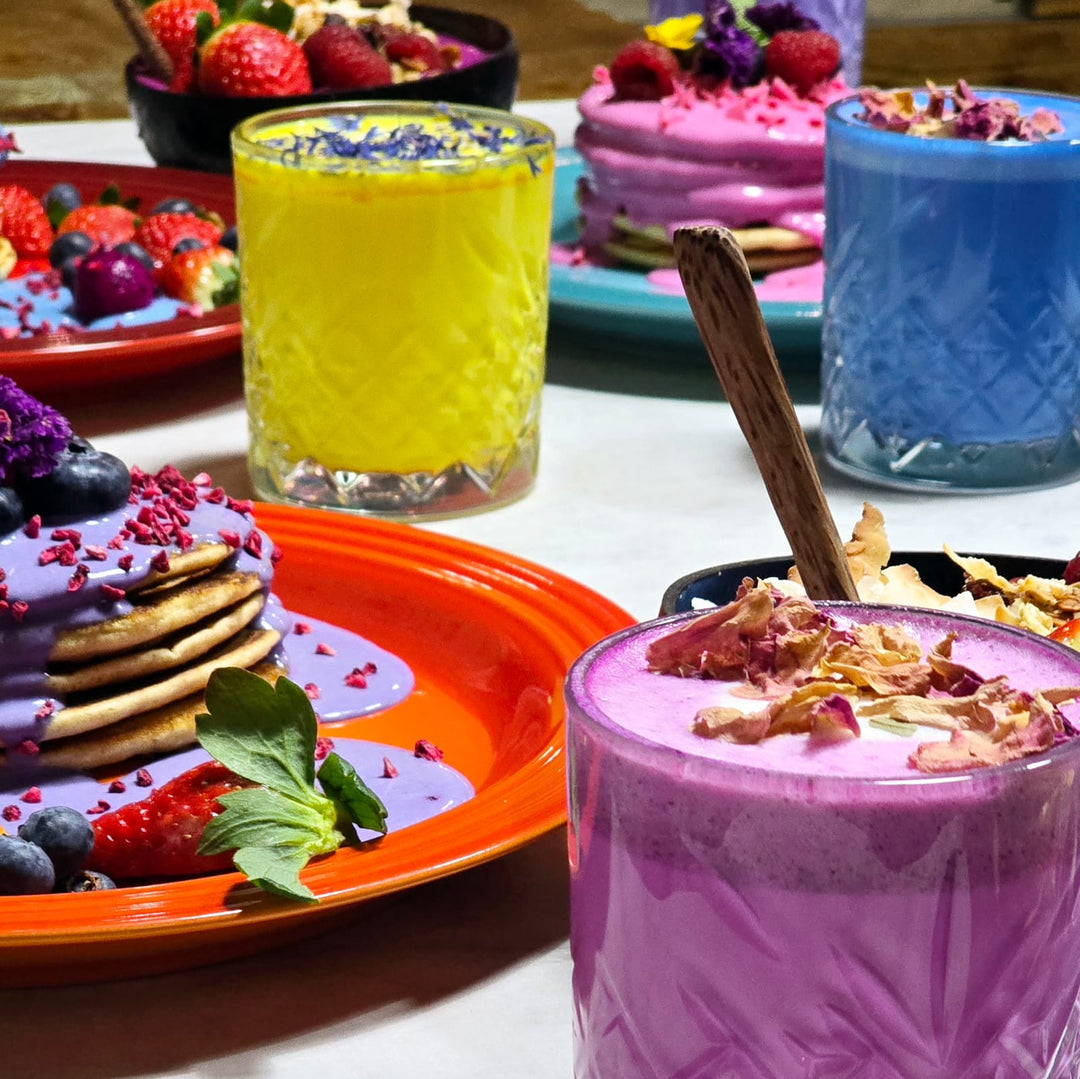


Natural Colouring for Kids’ Meals

🌈 Natural Colours on Kids’ Plates – Creative Cooking with Superfood Powders
Every parent knows the truth: kids eat with their eyes. Colourful, playful food is far more appealing than the usual beige-brown meals. But what if vibrant blue pancakes, pink smoothies or purple yogurt weren’t just beautiful — but 100% natural, made without artificial colourants?
Yes Superfood’s plant-based colouring powders make this possible. These powders are made from fruits, vegetables and algae, bringing natural colours and natural nutrients — vitamins, minerals and antioxidants — into everyday meals.
Colourful food encourages curiosity, helps children try new things, and turns eating into a fun, creative experience.
In this blog post, we’ll introduce Yes Superfood’s natural colouring powders and show you simple ways to use them in everyday meals and drinks.
How to Use Natural Colouring Powders
Most of these powders have a neutral or pleasant taste, making them easy to blend into kids’ favourite foods:
-
Yogurt – simply stir it in
-
Porridge – transforms breakfast into something colourful
-
Plant milk or dairy milk – perfect for colourful lattes
-
Smoothies – a natural enhancement for fruity blends
-
Pancake or muffin batter – great for baking
Important: Always start with a small amount and observe your child’s reaction.

Blue Spirulina Powder
Blue spirulina (phycocyanin) is a natural blue pigment extracted from spirulina algae. Known as the “blue gold” in traditional nutrition, it is valued for its striking colour and natural nutrient profile.
Why is it great for colouring?
Its completely neutral taste and smell make it ideal for picky eaters — it adds a vibrant blue colour without altering the flavour of food.
Nutrient Profile
Spirulina naturally contains:
-
Protein: high-quality plant protein
-
Vitamins: vitamin E, vitamin C, beta-carotene
-
Minerals: iron, potassium, calcium
-
Antioxidants: naturally occurring antioxidants
Traditional Use
Spirulina has been consumed for centuries in Asia and Latin America. It is traditionally used in warm drinks, smoothies, and is especially popular during colder months.
How to use: Stir into yogurt, smoothies, porridge or colourful lattes.
Daily amount: ½–1 tsp
Flavour: Neutral
Colour: Vibrant blue
Curcumin Powder
Curcumin powder contains the most valuable active compound of the turmeric root, used for thousands of years in traditional Indian nutrition.
Why is it great for colouring?
With its naturally sweet, mild flavour and golden-yellow colour, it brings a warm tone to food and drinks.
Nutrient Profile
-
Curcumin: the active compound of turmeric, a natural antioxidant
-
100% natural: plant-based ingredient
Traditional Use
Turmeric has been used in Ayurvedic nutrition for millennia. It is essential in Indian cuisine and the classic “golden milk”, especially popular in winter.
Tip: Traditional use often combines curcumin with black pepper and fat for better absorption.
How to use: Blend into plant milk, smoothies, or baked goods.
Daily amount: ½ tsp
Flavour: Mildly sweet, soft
Colour: Golden yellow

Dragon Fruit Powder
Yes Superfood’s Dragon Fruit Powder is made from 100% freeze-dried red pitaya. Its natural sweetness makes it especially appealing to children.
Why do kids love it?
Its subtly sweet, crystalline texture makes it snackable on its own — kids often treat it like candy! It also brings a stunning pink colour to food.
Nutrient Profile
Dragon fruit is naturally rich in:
-
Vitamin C
-
Minerals: calcium, sodium, phosphorus
-
Antioxidants
-
Fibre: naturally high
Traditional Use
Pitaya has been eaten for centuries across Southeast Asia and Latin America — commonly used in desserts, smoothies, and fresh fruit bowls.
How to use: Mix with water, juice, milk, yogurt or porridge. Can be eaten plain.
Daily amount: Up to 1 tsp
Flavour: Sweet on its own, neutral in food
Colour: Pink
Unique feature: Crunchy, edible texture — kids love it!

Butterfly Pea Powder
Butterfly Pea Powder is made from the Clitoria ternatea flower, used for centuries in Ayurveda and traditional Chinese nutrition.
Why is it safe for colouring?
In 2021, the US FDA approved its use as a natural colouring for food and beverages, confirming its safety.
Nutrient Profile
-
Anthocyanin antioxidants: natural blue pigments
-
Flavonoids: plant compounds
Traditional Use
Used for centuries in Southeast Asia — in Thai “blue rice”, Malaysian “nasi kerabu”, and as herbal tea. Traditionally enjoyed as a calming evening tea.
How to use: Mix into milk, plant milk, smoothies, or yogurt.
Daily amount: ½–1 tsp
Flavour: Mildly cinnamon-like in drinks, neutral in food
Colour: Vibrant blue (pH-dependent)
Black Carrot Powder
Black carrot powder is made from 100% black carrots — richer in nutrients and antioxidants than regular orange carrots.
Why is it special for colouring?
Its natural purple-mauve colour creates beautiful tones, especially due to its pH-dependent colour change:
-
acidic → pink
-
alkaline → blue-purple
Nutrient Profile
-
Anthocyanins: extremely high
-
Beta-carotene
-
Vitamins & minerals
-
Fibre
Traditional Use
Black carrots have been grown across Europe and Asia for centuries. Historically used in fermented foods, soups, salads, and even as natural textile dye.
Fun for kids:
Children love watching the “colour magic” unfold with lemon juice or baking soda.
How to use: Stir into yogurt, smoothies, porridge or cakes.
Daily amount: 1 tsp
Flavour: Mildly sweet, carrot-like (barely noticeable in food)
Colour: Purple-mauve (pH-dependent)

Ceremonial Matcha
Ceremonial matcha is a high-quality green tea powder made from shade-grown tea leaves.
What about caffeine?
Matcha naturally contains caffeine, but the amino acid L-theanine provides a smoother, more balanced release compared to coffee. Matcha has ~30 mg caffeine per cup (vs. 70–75 mg in coffee).
Nutrient Profile
-
L-theanine
-
Catechins (EGCG & others)
-
Polyphenols
-
Chlorophyll
Traditional Use
Used for centuries in tea ceremonies and now widely popular in lattes, smoothies, desserts and sweets.
Important: Recommended only for older children (12+), and only in the morning. Avoid for children prone to hyperactivity.
How to use: Mix with milk/plant milk or use in desserts.
Daily amount: ½–1 tsp (12+ years, morning only)
Flavour: Soft, mildly sweet green tea
Colour: Bright green
Activated Charcoal Powder
Activated charcoal is mainly used by adults for occasional purposes.
Important
It is NOT recommended for children, because:
-
It can bind not only toxins but also nutrients
-
It may interact with medications
-
Even adults should use it only occasionally
Daily amount: Not recommended for children
Flavour: Neutral
Colour: Black

Curcumin Powder
Curcumin powder contains the most valuable active compound of the turmeric root, used for thousands of years in traditional Indian nutrition.
Why is it great for colouring?
With its naturally sweet, mild flavour and golden-yellow colour, it brings a warm tone to food and drinks.
Nutrient Profile
-
Curcumin: the active compound of turmeric, a natural antioxidant
-
100% natural: plant-based ingredient
Traditional Use
Turmeric has been used in Ayurvedic nutrition for millennia. It is essential in Indian cuisine and the classic “golden milk”, especially popular in winter.
Tip: Traditional use often combines curcumin with black pepper and fat for better absorption.
How to use: Blend into plant milk, smoothies, or baked goods.
Daily amount: ½ tsp
Flavour: Mildly sweet, soft
Colour: Golden yellow
Összefoglalás
Az alábbi táblázatban összefoglaltuk, melyik superfood por mikortól és mekkora mennyiségben adható gyerekeknek. Továbbá odaírtuk azt is, melyik milyen ízű, így ha nagyon válogatós a gyermeked, akkor is tudsz választani neki való superfood port!c
Summary Table
|
Practical Tips for Colouring
1. Introduce Gradually
Start with ¼–½ tsp and observe your child’s reaction.
2. Colourful Morning Routine
Bright, colourful meals make breakfast more exciting — kids love blue, pink and purple foods.
3. Combine & Experiment
Powders can be mixed for fun effects:
-
Blue spirulina + dragon fruit = turquoise-purple gradient
-
Butterfly pea + lemon = blue → pink
-
Black carrot + baking soda = pink → blue
4. Creative Shapes
-
Ocean-blue pancakes
-
Pink dragon-fruit yogurt
-
Purple porridge
-
Colourful smoothie ice cubes
5. Mini Science Experiments
Butterfly pea and black carrot are perfect for pH-colour experiments — a fun way to learn science!
Why Choose Natural Colouring?
Artificial vs. Natural Colourants
Artificial colourants:
-
Contain synthetic additives
-
Offer no nutritional value
-
May trigger sensitivities in some children
Natural superfood powders:
-
✅ 100% plant-based
-
✅ Contain natural vitamins & minerals
-
✅ Rich in antioxidants
-
✅ No artificial additives
-
✅ No added sugar
Important Warnings & Legal Disclaimer
⚠️ Before Introducing Any New Ingredient:
1. Consult a doctor if your child:
-
Has known allergies
-
Has a chronic condition
-
Takes medication
-
If you are unsure about anything
2. Allergy Check:
Start with small amounts and monitor for 24 hours.
3. One at a Time:
Introduce powders individually.
4. Maximum Amounts:
Daily recommendations above are maximum values.
5. Caffeine:
Matcha is for older children only (12+), morning use.
Legal Notice
This blog post is for educational purposes only.
It does NOT:
-
Provide medical advice
-
Replace professional consultation
-
Diagnose or treat any conditions
These products:
-
Are natural food colourants and dietary supplements
-
Do not replace a balanced diet
-
Should be used responsibly
Always keep out of reach of children.
Closing Thoughts
Natural, plant-based colouring powders offer a playful way to introduce children to colourful, nutrient-rich foods. The vibrant colours make meals more fun, and help kids explore real ingredients from nature — algae, fruits, flowers and vegetables.
Yes Superfood’s natural powders turn simple meals into eye-catching, Instagram-worthy creations that kids love. Introduce them gradually, observe reactions, and enjoy the creative process together.
Colourful food = joyful learning = happy kids! 🌈
Sources
© 2025 – Educational content. All rights reserved.